.png)
Dark Spot Treatment vs Brightening Skincare. Which One You Should Choose?
Dark spots, uneven skin tone, and stubborn pigmentation affect millions of people—and the decision between at-home brightening skincare and professional pigmentation treatment is rarely straightforward. Your skin type, the depth of discoloration, and the underlying cause all determine which approach will actually work for you. At OHMI Anti-Aging Center, our physician-led approach helps patients navigate this decision with clinical precision, ensuring safer outcomes and results tailored to your unique skin biology.
This guide walks you through everything you need to know about professional pigmentation treatment versus brightening skincare. You will learn how dark spots form, why results vary dramatically by skin type, which treatment options exist, and how to determine the right path for your skin concerns.

Key Takeaways: Dark Spot Treatment vs Brightening Skincare in 2026
Professional pigmentation treatment targets deeper melanin deposits that over-the-counter brightening products cannot reach effectively.
Your Fitzpatrick skin type directly influences which dark spot treatments are safe and effective for your complexion.
OHMI Anti-Aging Center offers physician-supervised pigmentation protocols that reduce risks common with unsupervised laser treatments.
Brightening skincare works best for surface-level discoloration and as maintenance after professional treatment.
Combining clinical treatments with a customized home regimen produces the most lasting improvements in skin tone.
What Causes Dark Spots and Hyperpigmentation?
Hyperpigmentation occurs when your skin produces excess melanin in certain areas. This creates dark spots, patches, or an overall uneven skin tone. The triggers vary widely—from sun exposure and hormonal changes to post-inflammatory responses after acne or injury.
Sun damage remains the leading cause of dark spots. Years of UV exposure stimulate melanocytes (your pigment-producing cells) to work overtime, resulting in age spots, sunspots, and freckles that darken over time. These tend to appear on areas with the most sun exposure: your face, hands, chest, and shoulders.
Melasma presents a more complex challenge. This condition creates larger, symmetrical patches typically on the cheeks, forehead, and upper lip. Hormonal fluctuations during pregnancy, with birth control use, or from hormone therapy often trigger melasma. Unlike sunspots, melasma sits deeper in the dermis and proves notoriously difficult to treat.
How Post-Inflammatory Hyperpigmentation Develops
Post-inflammatory hyperpigmentation (PIH) follows skin trauma—acne breakouts, cuts, burns, or overly aggressive skincare treatments. When your skin heals from inflammation, it sometimes deposits extra melanin at the injury site. People with darker skin tones experience PIH more frequently because they have more active melanocytes.
Understanding your specific type of hyperpigmentation matters enormously. A sunspot responds differently than melasma, and PIH requires its own approach. This is precisely why physician evaluation proves essential before starting any dark spot treatment protocol.
How Your Fitzpatrick Skin Type Affects Pigmentation Treatment Results
The Fitzpatrick scale classifies skin into six types based on how it responds to sun exposure. This classification directly impacts which pigmentation treatments work safely for you—and which carry higher risks.
Fitzpatrick Types I-II: Fair Skin Considerations
If you have very fair to fair skin that burns easily, you typically fall into Fitzpatrick Type I or II. These skin types generally respond well to a wider range of laser treatments for pigmentation. Intense pulsed light (IPL), Q-switched lasers, and fractionated devices can effectively target dark spots with lower risk of complications.
However, fair skin is not without challenges. Sun damage accumulates quickly, and you may develop more visible freckling and sunspots over time. Your treatment plan should include strict sun protection protocols to prevent new pigmentation from forming immediately after treatment.
Fitzpatrick Types III-IV: Medium Skin Considerations
Medium skin tones with olive or light brown complexions require more careful treatment selection. While many laser options remain available, the risk of post-inflammatory hyperpigmentation increases. Certain wavelengths and intensities that work beautifully on fair skin may trigger rebound pigmentation on medium skin tones.
At OHMI Anti-Aging Center, our medical director evaluates your specific skin response patterns before recommending any energy-based device. This individualized assessment prevents the worsening of pigmentation that sometimes occurs when treatments are selected without proper skin typing.
Fitzpatrick Types V-VI: Darker Skin Considerations
Darker skin tones contain more active melanocytes, which makes them particularly vulnerable to pigmentation changes after laser treatments. The wrong device, wavelength, or setting can cause hypopigmentation (lightened patches) or paradoxical darkening that takes months to resolve.
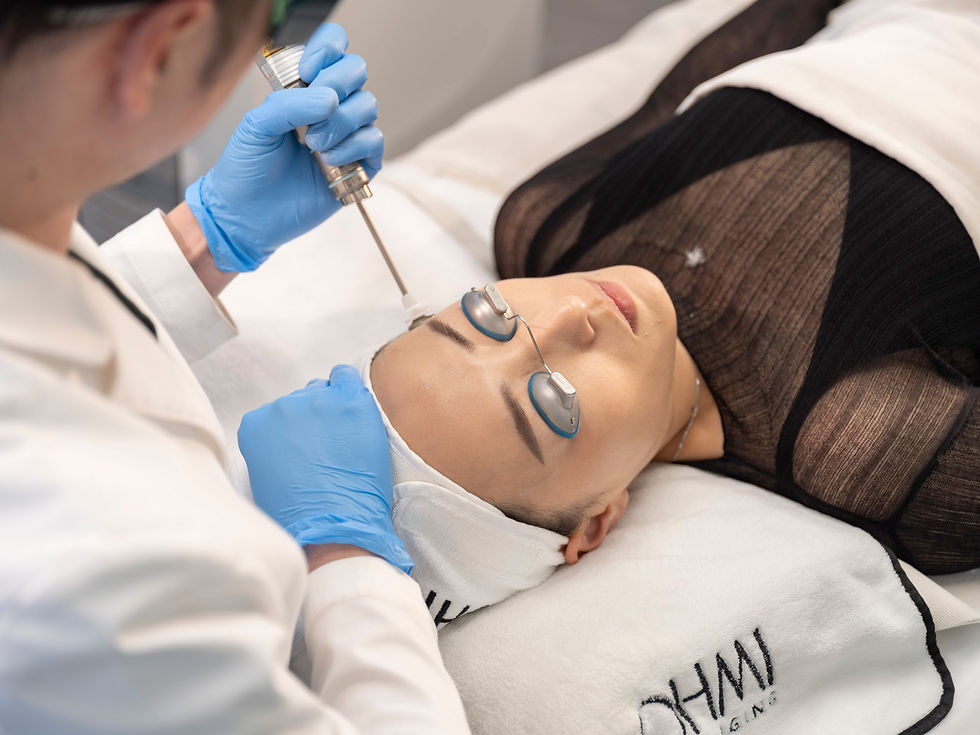
This does not mean professional treatment is off the table for darker skin. It means that physician expertise becomes even more critical. Devices like the Fotona Laser system at OHMI offer safer options for melanin-rich skin.
What Can Brightening Skincare Actually Do for Dark Spots?
Brightening skincare products target pigmentation through various mechanisms—inhibiting tyrosinase (the enzyme that produces melanin), accelerating cell turnover, and protecting skin from UV-triggered melanin production. When used correctly and consistently, these products can fade surface-level discoloration over time.
Key Ingredients in Brightening Skincare
Vitamin C remains one of the most researched brightening ingredients. As an antioxidant, it interrupts melanin synthesis and protects against free radical damage from sun exposure. Look for stable forms like L-ascorbic acid or ascorbyl glucoside in concentrations of 10-20% for noticeable effects.
Niacinamide (vitamin B3) reduces pigmentation by preventing melanin transfer from melanocytes to surrounding skin cells. Studies show that 4-5% niacinamide can visibly improve skin tone with consistent use. This ingredient also strengthens your skin barrier, making it suitable for sensitive skin types.
Alpha arbutin works similarly to hydroquinone (a prescription-strength brightener) but with a gentler mechanism. It inhibits tyrosinase activity to slow melanin production without the irritation or potential side effects associated with hydroquinone.
Retinoids accelerate cell turnover, helping pigmented cells shed faster while stimulating new, evenly-toned skin to surface. Prescription-strength tretinoin produces stronger results than over-the-counter retinol, but both require gradual introduction to avoid irritation.
The Realistic Timeline for Brightening Products
Here is the truth about brightening skincare: results take time. Most ingredients require 8-12 weeks of daily, consistent use before you will notice meaningful improvement in dark spots. Some stubborn pigmentation may take 6 months or longer to fade noticeably with topical products alone.
This timeline works for mild, surface-level discoloration. Deeper pigmentation—like dermal melasma or post-inflammatory hyperpigmentation in darker skin—rarely responds adequately to brightening skincare alone. This is where professional pigmentation treatment becomes necessary.
When Professional Pigmentation Treatment Outperforms Skincare
Brightening skincare has real limitations. The molecular size of many ingredients prevents deep penetration, and the concentrations available over the counter often lack the potency to address stubborn pigmentation. Professional treatments access deeper skin layers and use technologies that deliver more dramatic results in shorter timeframes.
Depth of Pigmentation Matters
Pigmentation exists at different depths within your skin. Epidermal pigmentation (surface level) responds reasonably well to brightening products. Dermal pigmentation—melanin deposits in the deeper dermal layer—does not. No serum can reach those depths effectively.
A trained physician can assess whether your pigmentation is epidermal, dermal, or mixed through visual examination and specialized tools like Wood's lamp analysis. This assessment determines whether topical products can help or whether you need treatments that penetrate beyond the epidermis.
Types of Professional Pigmentation Treatments
Several professional treatment categories address pigmentation at different depths and through different mechanisms. Your physician will recommend options based on your skin type, pigmentation type, and treatment goals.
Chemical Peels for Pigmentation
Medical-grade chemical peels remove pigmented outer skin layers, allowing fresher, more evenly-toned skin to emerge. Superficial peels using glycolic or salicylic acid work on mild discoloration. Medium-depth peels with trichloroacetic acid (TCA) address more stubborn pigmentation but require longer recovery.
The key advantage of professional peels over at-home versions is concentration and controlled application. Your physician can adjust the peel strength to your specific needs while monitoring your skin's response throughout the treatment.
Laser and Light-Based Treatments
Laser treatments target pigment directly. Q-switched lasers break apart melanin clusters that your body then clears naturally. IPL (intense pulsed light) uses broad-spectrum light to address diffuse pigmentation across larger areas. Fractionated lasers create microscopic treatment zones that trigger collagen remodeling while reducing pigmentation.
OHMI Anti-Aging Center partners with Fotona and Lumenis, the inventor of laser and IPL technology, to deliver pigmentation treatments using the most advanced platforms available. These partnerships ensure you receive treatment with clinically validated equipment operated by physicians with specialized training.
Dr. Jen at OHMI Anti-Aging Center has performed more Fotona laser treatments than any other provider in the country, accumulating unparalleled expertise in optimizing settings for different skin types and conditions. This experience translates directly into safer, more effective outcomes for patients.

How Dr. Jen Customize Pigmentation Treatment Plans
A one-size-fits-all approach to pigmentation treatment does not exist. What works beautifully for one patient may worsen another's condition. This is why physician evaluation and customized treatment planning make such a significant difference in outcomes.
The Initial Assessment Process
Your pigmentation treatment journey should begin with a thorough skin assessment. A qualified physician will evaluate the type, depth, and distribution of your pigmentation. They will also review your medical history, current medications, and previous treatments to identify any factors that might affect your results or safety.
At OHMI Anti-Aging Center, this assessment includes AI-powered skin analysis that detects subsurface damage invisible to the naked eye. This technology allows your treatment team to identify pigmentation developing beneath the surface before it becomes visible, enabling proactive treatment planning.
Building a Multi-Modal Treatment Strategy
The most effective pigmentation treatment plans typically combine multiple approaches. A patient might receive a series of professional treatments to address existing pigmentation while simultaneously using targeted home care products to maintain results and prevent new discoloration.
This multi-modal approach might include chemical peels to reduce surface pigmentation, followed by RF microneedling to remodel deeper skin layers, combined with a prescription-strength brightening regimen for daily use. Each component addresses a different aspect of the problem for more complete results.
Setting Realistic Expectations for Results
Even with professional treatment, pigmentation improvement takes time. Most patients require multiple treatment sessions spaced several weeks apart. Visible improvement typically begins after 2-3 treatments, with optimal results appearing 3-6 months after completing your treatment series.
Some types of pigmentation respond better than others. Sunspots and age spots generally clear more readily than melasma, which may require ongoing maintenance treatments. Your physician should set clear expectations about what is achievable for your specific condition during your consultation.
Why Physician Supervision Matters for Pigmentation Treatment
The aesthetic treatment landscape includes many non-physician providers offering pigmentation treatments. While some may deliver acceptable results, physician supervision offers distinct advantages—especially for more complex conditions or patients with darker skin tones.
Medical Expertise Reduces Risk
Physicians understand skin biology at a deeper level. They can identify conditions that might complicate treatment, recognize signs of potential complications early, and adjust treatment parameters in real-time based on your skin's response. This medical training becomes particularly important when treating pigmentation in melanin-rich skin or addressing conditions like melasma.
OHMI Anti-Aging Center maintains a physician-led model where all treatments are performed by a licensed physician—never delegated to unlicensed staff. The medical director, a quadruple board-certified physician, oversees every treatment protocol to ensure clinical rigor and patient safety.
Access to Advanced Treatment Options
Certain powerful pigmentation treatments require physician oversight by regulation. Prescription-strength topical medications like hydroquinone and tretinoin, deeper chemical peels, and specific laser platforms fall into this category. Working with a physician gives you access to the full spectrum of treatment options rather than a limited subset.
Integrated Approach to Skin Health
Pigmentation often connects to broader skin health and systemic factors. Hormonal imbalances can drive melasma. Inflammation from conditions like acne triggers post-inflammatory hyperpigmentation. A physician can evaluate these underlying factors and address them as part of your treatment plan, improving both immediate results and long-term outcomes.
Combining Professional Treatment with At-Home Brightening Care
Professional treatments and brightening skincare work best together rather than as either/or choices. Understanding how to sequence and combine these approaches maximizes your results while protecting your skin.
Pre-Treatment Preparation
Many physicians recommend a preparation phase before professional pigmentation treatment. This typically involves using brightening ingredients like vitamin C, niacinamide, or gentle retinoids to prime your skin. Some protocols include a brief course of hydroquinone to suppress melanocyte activity before treatment.
This preparation phase serves multiple purposes. It begins reducing surface pigmentation, optimizes your skin's health for treatment, and can help identify how your skin responds to active ingredients before you undergo more intensive procedures.
Post-Treatment Maintenance
After completing professional treatment, brightening skincare becomes essential for maintaining your results. Pigmentation tends to recur without ongoing preventive care—especially with sun exposure or hormonal fluctuations. A daily regimen including antioxidants, brightening agents, and religious sunscreen use helps preserve your investment in professional treatment.
OHMI Anti-Aging Center takes a holistic approach that focuses on both treating existing pigmentation and preventing future discoloration. Your treatment team will recommend specific home care products suited to your skin type and goals as part of your overall treatment plan.
The Critical Role of Sun Protection
No pigmentation treatment—professional or otherwise—will deliver lasting results without diligent sun protection. UV exposure triggers melanin production, rapidly undoing the improvements you have worked to achieve. Broad-spectrum SPF 30 or higher, applied daily and reapplied every two hours during sun exposure, is non-negotiable for anyone treating pigmentation.
Physical sunscreens containing zinc oxide or titanium dioxide offer advantages for pigmentation-prone skin. They provide immediate protection upon application and reflect UV rays rather than absorbing them, which may be gentler for sensitized post-treatment skin.
Step-by-Step Guide to Evaluating Your Pigmentation Treatment Options
Making the right choice between brightening skincare and professional treatment requires honest self-assessment and, ideally, professional guidance. Here is how to evaluate your options systematically.
Step 1: Identify Your Pigmentation Type
Start by examining your dark spots closely. Are they small, distinct spots (likely sunspots)? Larger patches with diffuse borders (possibly melasma)? Marks left behind by acne or other skin injuries (post-inflammatory hyperpigmentation)? The type of pigmentation you have significantly influences which treatments will work.
If you cannot determine your pigmentation type on your own, a consultation with a dermatologist or medical aesthetician provides clarity. Many practices offer complimentary or low-cost consultations for this initial assessment.
Step 2: Assess Your Skin Type and Tone
Your Fitzpatrick skin type affects both your treatment options and your risk of complications. Generally, the darker your skin tone, the more carefully you need to select treatments to avoid post-inflammatory hyperpigmentation or hypopigmentation.
Be honest about how your skin typically responds to inflammation or injury. If you tend to develop dark marks after breakouts, cuts, or bug bites, your skin is prone to PIH, and aggressive treatments carry higher risk.
Step 3: Consider Your Timeline and Budget
Brightening skincare costs less upfront but requires months of consistent use for results. Professional treatments deliver faster, more dramatic improvements but require larger initial investment. Consider both your timeline for results and your budget when choosing your approach.
Many patients find that starting with professional treatment and then transitioning to maintenance skincare offers the best value. The professional treatment delivers noticeable improvement quickly, while the skincare regimen sustains those results long-term.
Step 4: Evaluate Previous Treatment Responses
If you have tried brightening products before with limited success, that history provides valuable information. Products applied consistently for 3+ months without improvement suggest your pigmentation may be too deep for topical treatment alone. Similarly, if you have experienced complications from previous professional treatments, your physician needs to know to select safer alternatives.
Step 5: Consult with a Qualified Physician
For anything beyond mild surface discoloration, a professional consultation provides the clearest path forward. A physician can assess your skin, recommend appropriate treatments, set realistic expectations, and monitor your progress to adjust the plan as needed.
During your consultation at OHMI Anti-Aging Center, expect a thorough evaluation including skin typing, pigmentation assessment, review of your health history, and discussion of your goals. This forms the foundation for a personalized treatment plan designed specifically for your skin.
Common Pigmentation Treatment Mistakes to Avoid
Even with good intentions, many people sabotage their pigmentation treatment results through avoidable mistakes. Understanding these pitfalls helps you achieve better outcomes.
Inconsistent Product Use
Brightening products only work with daily, long-term use. Applying a serum sporadically or abandoning it after a few weeks guarantees disappointment. If you choose topical treatment, commit to the regimen for at least 12 weeks before evaluating results.
Skipping Sun Protection
This bears repeating because it is the single most common mistake. Treating pigmentation without sun protection is like trying to fill a bathtub with the drain open. Every moment of unprotected sun exposure triggers new melanin production, countering your treatment efforts.
DIY Treatments Beyond Your Expertise
At-home chemical peels, derma-rollers, and other intensive treatments carry real risks when used incorrectly. Applying a too-strong peel or using a device without proper technique can cause burns, scarring, or worsened pigmentation. Save intensive treatments for professionals who can control the application and respond to any adverse reactions.
Treating the Wrong Condition
Not all dark marks are equal, and treating the wrong condition wastes time and money. Melasma treatment differs substantially from sunspot treatment. Post-acne marks require different approaches than age-related pigmentation. Accurate diagnosis before treatment prevents frustration from ineffective therapies.
Expecting Overnight Results
Pigmentation took time to develop and takes time to resolve. Even professional treatments require multiple sessions and patience. Setting unrealistic timelines leads to abandoning effective treatments before they can work or chasing increasingly aggressive options that carry higher risks.
What Results Can You Realistically Expect from Pigmentation Treatment?
Understanding realistic outcomes helps you make informed decisions and assess your progress accurately. Here is what to expect from different treatment approaches.
Brightening Skincare Results
With consistent daily use of evidence-based brightening ingredients, you can expect noticeable improvement in surface-level pigmentation within 2-3 months. Deeper or more stubborn discoloration may take 6 months or longer to fade significantly. Complete elimination of pigmentation is rarely achievable with skincare alone, but meaningful reduction is realistic.
Chemical Peel Results
A series of chemical peels (typically 3-6 treatments) can reduce surface pigmentation by 50-70% in appropriate candidates. Results vary based on the peel depth, your skin type, and the nature of your pigmentation. Peels work particularly well for diffuse discoloration and surface-level spots.
Laser Treatment Results
Laser treatments can deliver dramatic improvement—some sunspots clear completely after one or two sessions. However, results depend heavily on proper candidate selection and device parameters. Inappropriate laser treatment can worsen pigmentation, especially in darker skin tones. When performed correctly by an experienced physician, laser treatment offers some of the most significant improvements available. f
The Future of Pigmentation Treatment in 2026 and Beyond
Pigmentation treatment continues to evolve with new technologies and refined protocols. Several developments are shaping more effective, safer options for patients of all skin types.
Advances in Energy-Based Devices
Newer laser and radiofrequency devices offer improved safety profiles for darker skin tones. Picosecond lasers deliver energy in shorter pulses that may reduce heat-related complications. Combination platforms allow physicians to use multiple wavelengths in a single treatment session for more thorough pigmentation correction.
Topical Innovations
Newer brightening ingredients like tranexamic acid and cysteamine are gaining evidence for effectiveness with favorable safety profiles. Advanced delivery systems help active ingredients penetrate more effectively, improving results from topical products. Personalized skincare formulations based on genetic testing may offer more targeted approaches in the future.
Integrated Treatment Protocols
The trend toward combining treatments—professional procedures plus optimized home care plus lifestyle modifications—produces better outcomes than any single approach alone. This integrated methodology, which OHMI Anti-Aging Center has championed, represents the current gold standard for pigmentation management.
How OHMI Anti-Aging Center Approaches Pigmentation Treatment Differently
The OHMI approach to pigmentation reflects a philosophy that treats aging—and its visible signs like dark spots—as a biological process rather than a purely cosmetic concern. This perspective informs every aspect of how we evaluate and treat hyperpigmentation.
Physician-Led Care From Consultation to Completion
Every OHMI patient receives evaluation and treatment from a licensed physician. Your initial consultation includes thorough skin analysis, medical history review, and discussion of your goals. Treatment recommendations are made by the physician who will perform your procedures—not by sales staff or technicians operating beyond their training.
Advanced Technology With Expert Application
Access to the latest pigmentation treatment devices means nothing without the expertise to use them appropriately. Dr. Jen's standing as a key opinion leader for multiple device manufacturers—training other physicians in proper technique—reflects the depth of expertise OHMI brings to every treatment. This expertise proves particularly valuable for patients with melanin-rich skin or challenging conditions like melasma.
Customized, Individualized Treatment Plans
OHMI does not offer one-size-fits-all treatment packages. Your pigmentation treatment plan is designed specifically for your skin type, pigmentation type, lifestyle, and goals. This customization extends to your home care recommendations, which complement your professional treatments for optimal results.
In Conclusion: Choosing the Right Path for Your Pigmentation Concerns
The choice between brightening skincare and professional pigmentation treatment is not either/or—it is about matching your treatment approach to your specific needs. Mild, surface-level discoloration may respond well to consistent topical care. Deeper, more stubborn pigmentation typically requires professional intervention for meaningful improvement.
Your skin type matters enormously. Darker skin tones need more careful treatment selection to avoid complications. This is precisely why physician evaluation is so valuable—an expert can assess your skin, identify the safest and most effective options, and guide you toward realistic results.
Whatever path you choose, sun protection remains the foundation of any pigmentation management strategy. Without it, no treatment—professional or otherwise—will deliver lasting results.
If you are ready to address dark spots and uneven skin tone with a physician-guided approach, OHMI Anti-Aging Center offers consultations where you can learn exactly what your skin needs. Our team will assess your unique situation and recommend a treatment plan designed for your specific goals and skin type.
FAQs About Dark Spot Treatment vs Brightening Skincare in 2026
Can brightening skincare completely remove dark spots?
Brightening skincare can fade surface-level dark spots significantly but rarely eliminates them completely. These products work best on mild, epidermal pigmentation. For deeper discoloration or stubborn spots, professional treatments like those offered at OHMI Anti-Aging Center target melanin at depths that topical products cannot reach.
How long does professional pigmentation treatment take to show results?
Most patients notice visible improvement 2-4 weeks after their first professional treatment, with optimal results developing over 3-6 months. The timeline depends on your pigmentation type and treatment modality. OHMI Anti-Aging Center creates personalized treatment plans with realistic timelines based on your specific condition and goals.
Why do my dark spots come back after treatment?
Pigmentation recurs when the underlying triggers remain active. Sun exposure, hormonal fluctuations, and inflammation continue to stimulate melanin production. Long-term results require ongoing sun protection, maintenance skincare, and sometimes periodic professional treatments. OHMI takes a holistic approach addressing both treatment and prevention.
What is the difference between sunspots, age spots, and melasma?
Sunspots and age spots are essentially the same—localized melanin deposits caused by cumulative UV exposure. They appear as distinct, flat brown spots. Melasma presents as larger, diffuse patches often triggered by hormones. Melasma sits deeper in the skin and proves more challenging to treat than surface-level sunspots.
Should I use hydroquinone for dark spots?
Hydroquinone remains one of the most effective prescription brightening agents, but it requires physician supervision. Long-term use can cause side effects including paradoxical darkening. Your physician can determine if hydroquinone is appropriate for your situation and monitor your response. OHMI physicians customize brightening regimens based on individual needs.
Can I treat hyperpigmentation during summer?
Many professional pigmentation treatments are best avoided during peak summer months when sun exposure is highest and hardest to avoid. However, brightening skincare and certain treatments can continue year-round with proper sun protection. OHMI Anti-Aging Center schedules treatments strategically based on your lifestyle and sun exposure patterns.
How do I know if my pigmentation is too deep for skincare products?
If you have used brightening products consistently for 3+ months without noticeable improvement, your pigmentation may be dermal rather than epidermal. A physician evaluation—including tools like Wood's lamp analysis—can determine pigmentation depth and guide appropriate treatment selection.
What should I look for in a pigmentation treatment provider?
Look for physician-led practices with experience treating your skin type and pigmentation concern. Ask about the provider's training, the devices they use, and their approach to customizing treatment. At OHMI Anti-Aging Center, all treatments are performed by licensed physicians with specialized expertise in treating diverse skin types safely.
Are there any new pigmentation treatments in 2026?
Advances in RF microneedling, picosecond lasers, and combination therapies continue to expand treatment options, particularly for patients with darker skin. Newer topical ingredients like tranexamic acid show promising results with good safety profiles. OHMI Anti-Aging Center stays at the forefront of these developments through ongoing education and partnerships with leading device manufacturers.


Comments